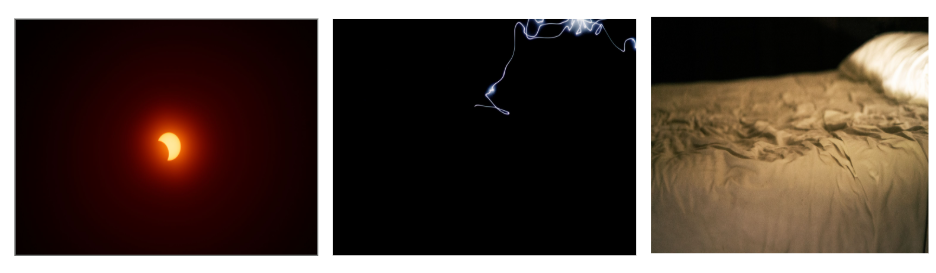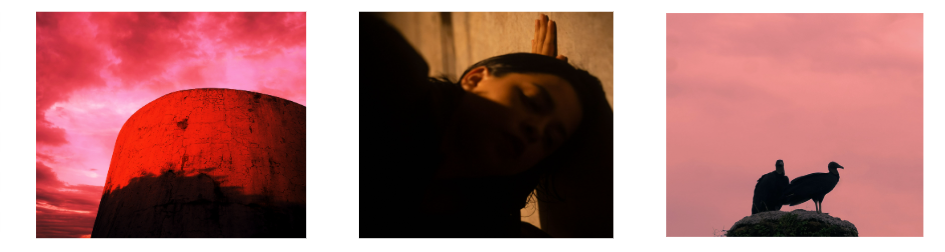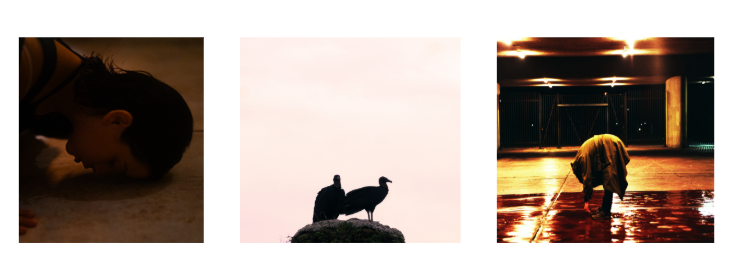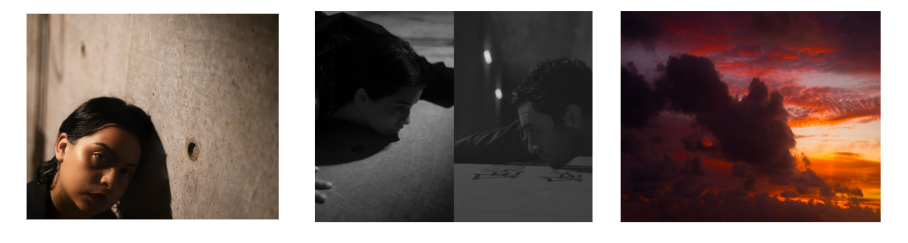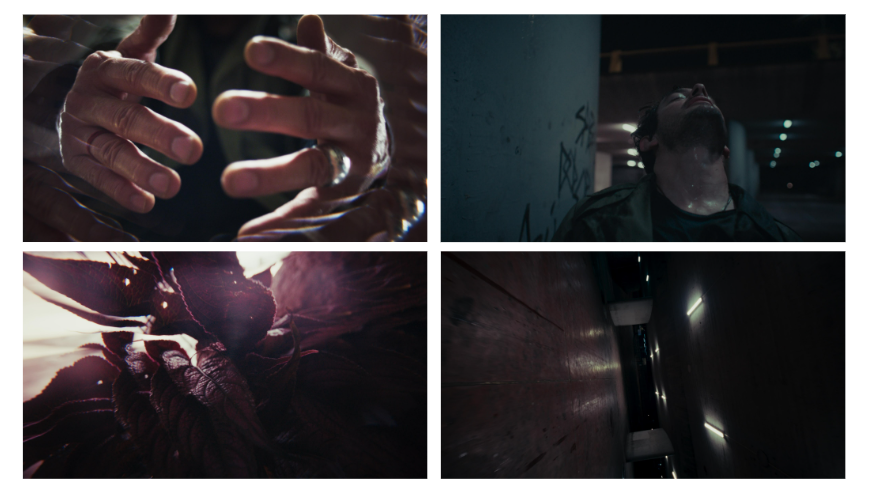
Fissures.


Expanded Audiovisual Installation.

Synchronized triptych with optional performative activation.

FANA ADJANI | MÉXICO | 2026


ABOUT THE WORK.

Fissures is conceived as a sensory dispositif on grief, loss, and memory in contemporary life: a field of affects where pain does not appear as a closed object, but as mobile matter that migrates between bodies, an affective substance that shifts, settles, and is rewritten through the eclipse of time. The installation understands grief not as closure but as a crack: an interval that alters perception and opens a threshold for inhabiting loss through the body, creating conditions for perception, contact, and shared breath, and making legible human and interspecies networks of care along the porous wall between life and death. The living sustains both the living and the dead in a material continuity, where our narratives are composed with other presences, other skins, other rhythms. Inspired by the myth of Pyramus and Thisbe from a feminine perspective, the piece shifts tragic logic toward an ethics of persistence: not surrender, but giving form to pain as movement, ritual, and metamorphosis. By integrating film, photography, and sound design, the work expands its narrative outward toward the audience; in programmable activations, its communal dimension intensifies as encounter and dance become an affective and political language.


INSTALLATION PROPOSAL.

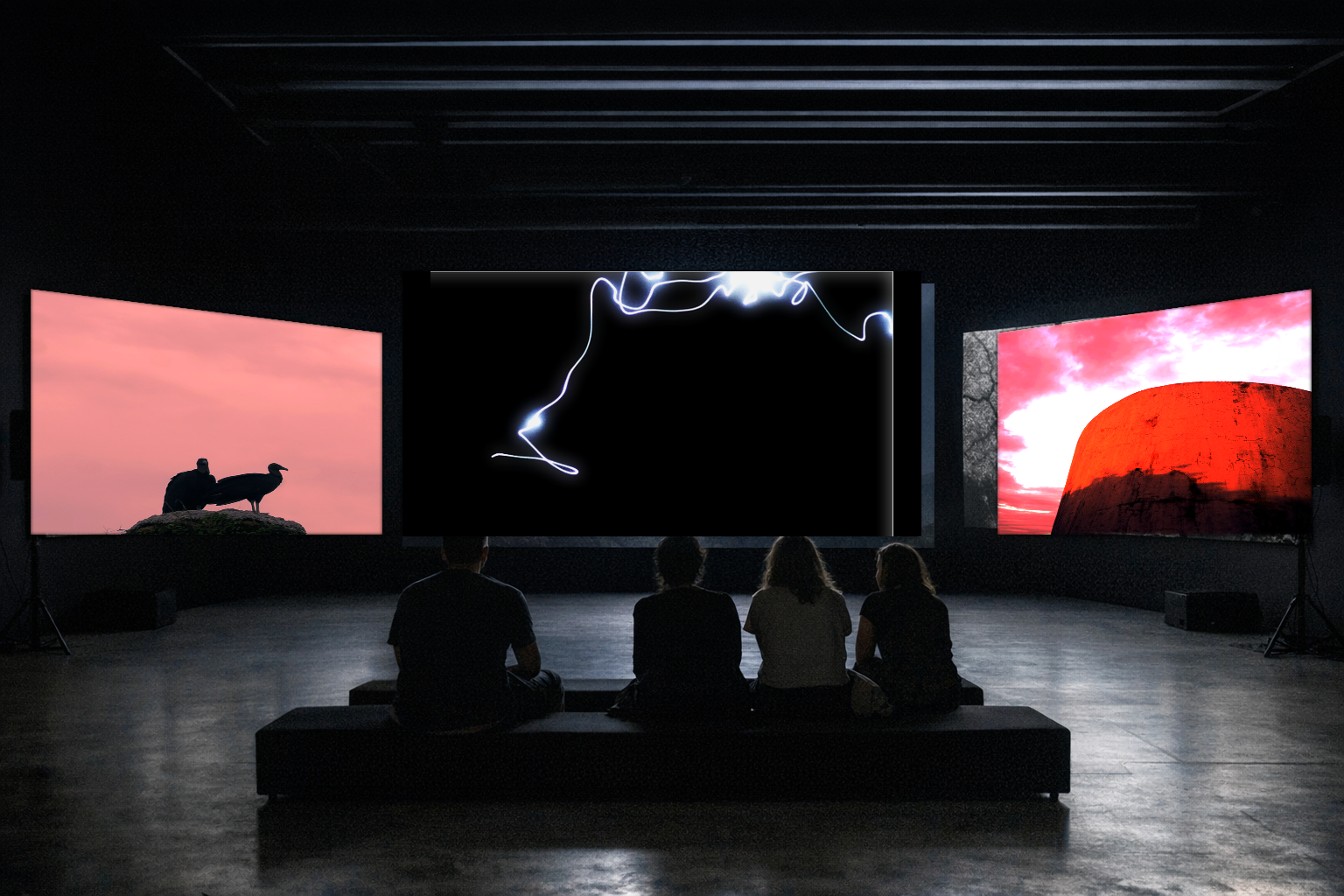
Fissures is a synchronized triptych audiovisual installation in which lateral photographic loops and a central sound-visual threshold (lightning, black, and wind) periodically open into the projection of MANDRÁGORA as the narrative core, with optional performative activation on scheduled dates.

Modalities:

Mode A (standard): installation in continuous loop (exhibition visit).

Mode B (optional): programmable performative activation (DJ set).

Key operational rule:

Dancing and full occupation of the space only take place during activations scheduled by the institution. In standard mode, the room is not enabled as a dance floor.

Cycle duration: total = photos + audio + film + audio

Photo duration: (3) min

Audio duration: (1) min

MANDRÁGORA film duration: (15) min

Audio duration: (1) min

Total duration: (20)min

Minimum recommended space: (5) m² (or black box)
Audio: stereo / 4 channels (depending on availability)


I. DESCRIPTION.

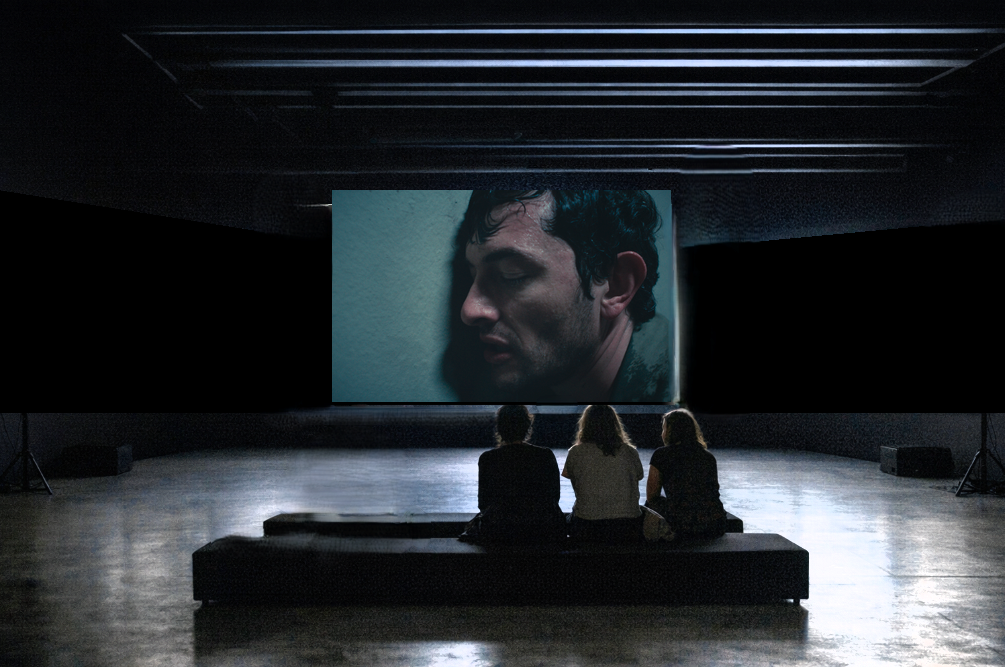
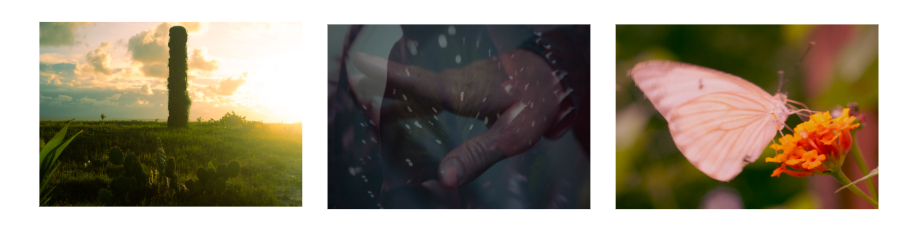
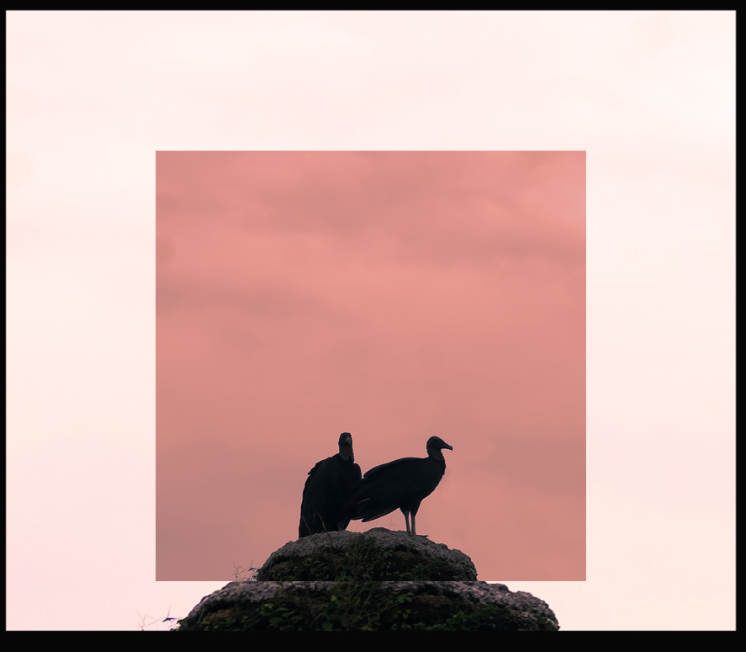
Fissures is an expanded audiovisual installation conceived as a synchronized triptych that organizes the audience’s experience through cycles of image and sound. Two side screens present a loop of photographic video, a moving archive that functions as active memory and visual atmosphere. On the central screen, an image of lightning operates as a signal and threshold: a point of tension that announces the passage from the archive as memory into narration. At the end of the loop, all three screens fade to black, and a brief wind sound design opens a space for breath. After this threshold, only the central screen projects the full short film MANDRÁGORA, including credits; once it ends, a second threshold of black screens and wind restarts the cycle and returns the viewer to the archive of memory.

The piece operates in its standard mode as a visitable installation (movement through the space, duration, and listening) and can be fully exhibited without live activation. On dates selected by the institution, Fissures may incorporate a programmable performative activation through a live set, intensifying the communal and affective dimension of the dispositif. In this case, the room becomes a dance floor exclusively during the activation, while maintaining the triptych’s exhibition logic the rest of the time.

grief / migration / metamorphosis / collective affectivity

audience: bodily presence (in standard mode), collectivity (during activations)

1.2 SHORT VERSION

Fissures is an audiovisual installation with a sensory language unfolding across three synchronized screens. On the side screens, a looped archive of photographic video appears as memory, while the central screen holds an image of lightning that functions as a threshold. At the end of the loop, all three screens shift to black, accompanied by a brief immersive wind sound design; then, only on the central screen, the full short film MANDRÁGORA begins, including credits. The installation is autonomous; dancing is only enabled during programmable performative activations.

1.3 KEYWORDS

grief / migration / metamorphosis / memory / community / ritual / archive / fissures / threshold / collectivity / affectivity


II. IN-ROOM EXPERIENCE.

2.1 Mode A — Installation (standard visit)

Audience: circulation / duration / listening

Dancing is not enabled.

Lighting conditions: low light for the projection of the installation, with low-intensity warm LED lighting (2700K–3000K) to allow safe movement when entering the room or navigating corridors, steps, and exits without interfering with the projection.

Audio: stereo or 4 channels

Suggested capacity: adaptable to the venue.

2.2 Mode B — Performative activation (optional, programmable)

Activation: live DJ set (if applicable: Pepe Mogt) and/or local alternative

During the activation, the room is enabled as a dance floor.

Capacity control and mediation: 200 people or more depending on the space.

Performance schedule / limits: 60 to 90 minutes of DJ set.

Format: live DJ set (stereo)

Space and operation

DJ location: preferably in a rear or side corner of the room, without obstructing the screens/projection.

Minimum table area: 2.0 m (width) x 1.5 m (depth) + 1.0 m clearance around it for operation/safety.

Table height: 0.90–1.00 m.

Room rule: dancing is only enabled during the activation; outside of that schedule, the work remains in exhibition-visit mode.

2) Audio — Minimum requirements (essential)


III. TEMPORAL DRAMATURGY OF THE TRIPTYCH (the logic of the loop).

3.1 Phase A — Constellation (photographs)

L/R: photo loop as an archive of memory in video

C: lightning image (loop or nearly still)

Audio: [music / minimal wind atmosphere]

3.2 Phase B — Threshold 1 (1 min)

L/C/R: black

Audio: wind, sound design

3.3 Phase C — Narrative core (short film MANDRÁGORA)

C: full MANDRÁGORA with credits

L/R: black

Audio: film audio

3.4 Phase D — Threshold 2 (1 min)

L/C/R: black

Audio: wind, sound design

Return to Phase A


IV. SPATIAL ARRANGEMENT (how it is installed).

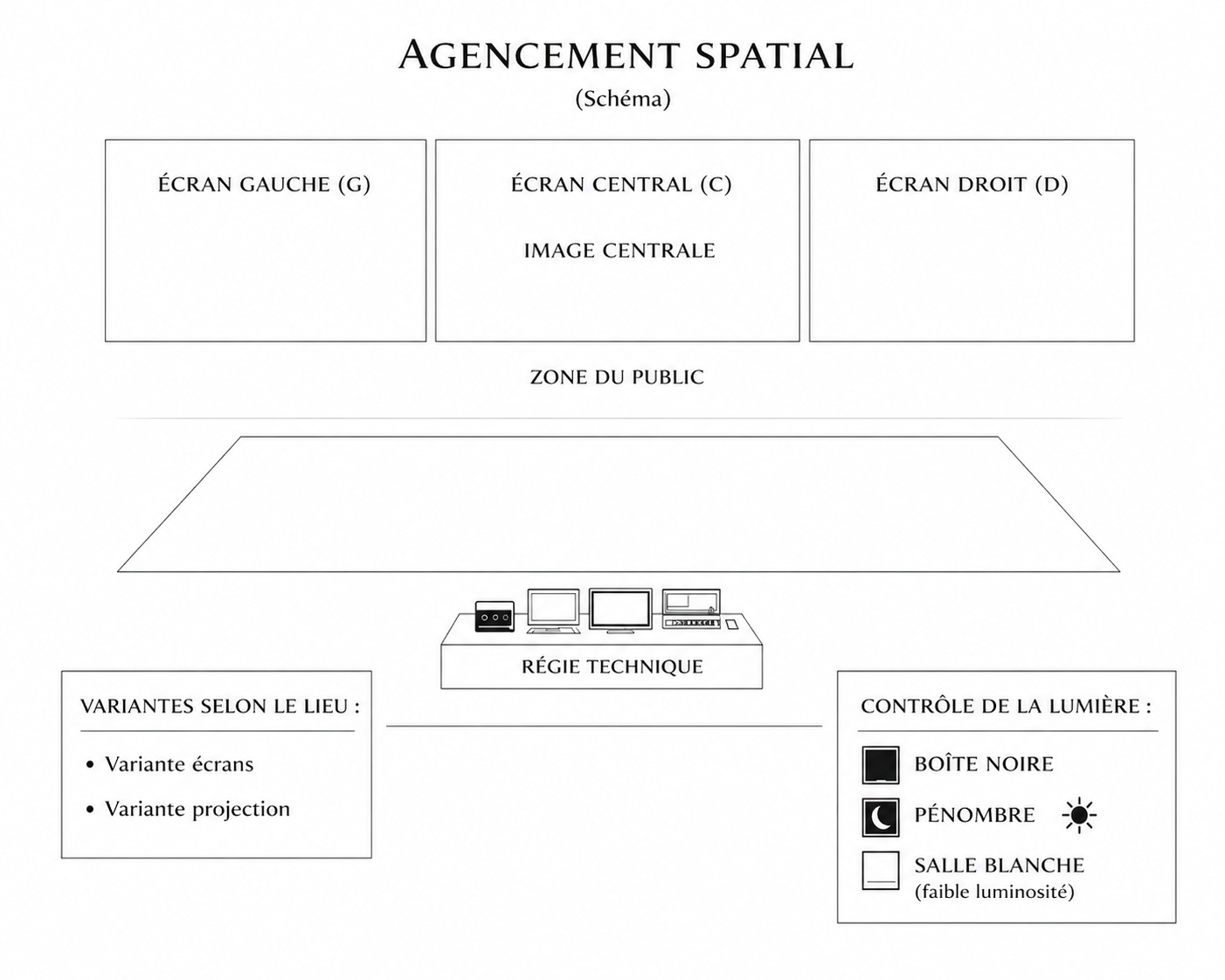
4.1 General layout (with diagram)

Frontal triptych: L — C — R

Distance between screens: 35 cm minimum to 1 meter

Central image size: minimum 20 m, adaptable according to the space option.

Audience area: adaptable to the venue

4.2 Venue-based variation

Screen version / projection version

4.3 Light control

Black box / penumbra / white room (minimum condition: low light)


V. COMPONENTS AND CONTENTS (deliverables).

Installation components.

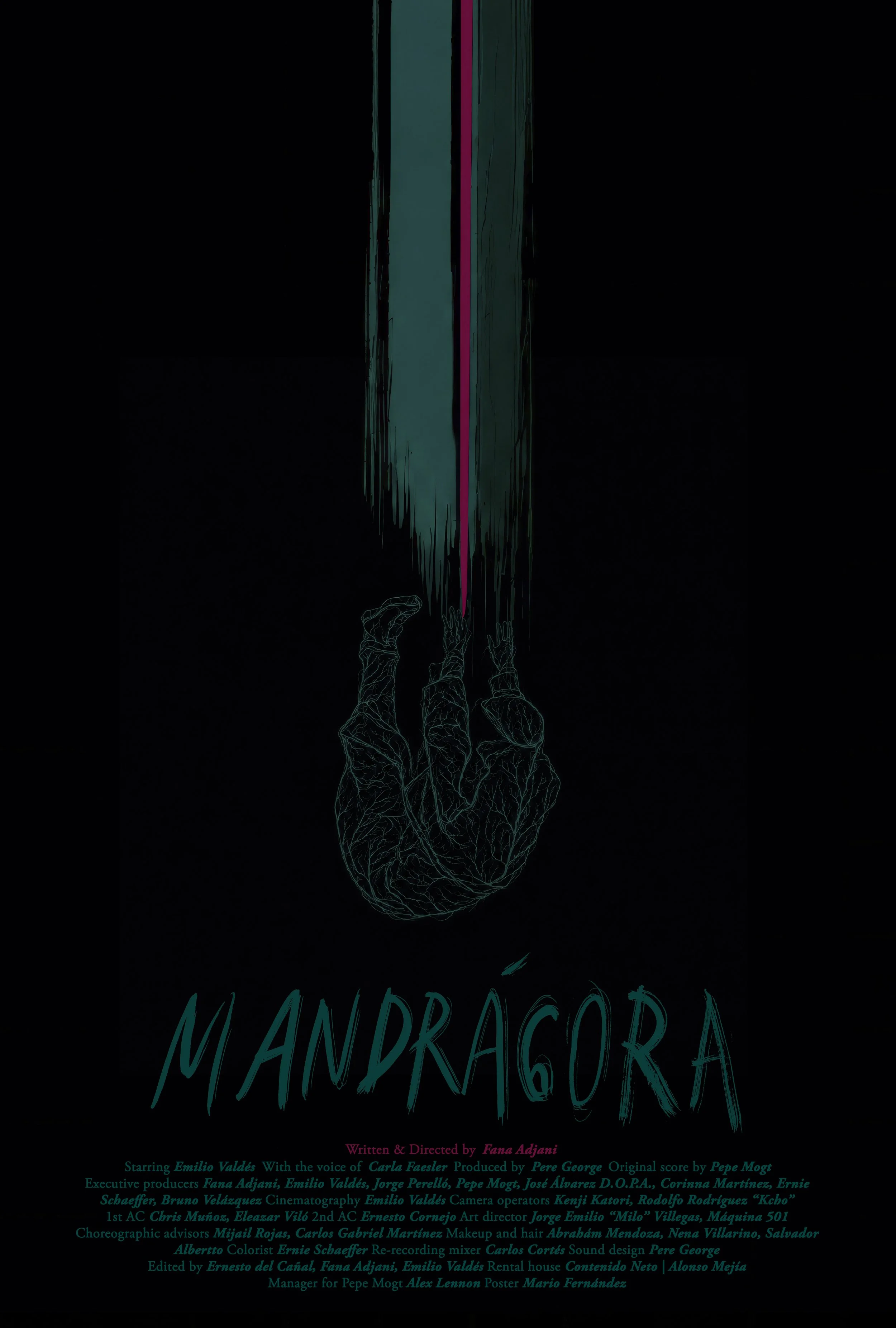
Film component (short film): MANDRÁGORA

MANDRÁGORA - FANA ADJANI
© 2026

Moving photographic archive (video loop) L/C/R.

Multichannel sound design (wind and atmosphere) / Stereo + 4 channels.


VI. TECHNICAL REQUIREMENTS (INSTALLATION).

6.1 Video

3 screens / 3 projectors (selection depending on venue)

Media server (1) with 3 outputs

Cables and cable type according to distance

Mounts / rigging / VESA

6.2 Audio

Stereo minimum / 4 channels recommended

Audio interface

Speakers (appropriate to achieve satisfactory SPL in the space)

Reference level guidelines

6.3 Electricity

Dedicated circuits

UPS / voltage regulator

6.4 Cabling and safety

Cable trays / cable ramps

LED lighting for circulation in the space / signage / evacuation routes


VII. TECHNICAL REQUIREMENTS (OPTIONAL ACTIVATION).

7.1 PA Audio (if there is a DJ)

PA (room)

Stereo system appropriate to the size of the room:

Small rooms (up to approx. 80 m²): 2 professional active tops + optional sub.

Medium/large rooms: museum PA system or external provider (tops + subs) with even coverage.

Mixer / control: museum mixer or processor/DSP to calibrate levels.

Levels: the museum defines the limits; it is recommended to maintain a safe average (e.g. 85–95 dB) according to local regulations and coexistence requirements.

DJ monitoring (essential)

1–2 monitors (wedge or nearfield) aimed at the DJ.

Connections (essential)

PA input: 2 x balanced XLR (L/R) from the DJ mixer.

Sufficient audio cabling to reach the museum’s patch point.

3) DJ Equipment

2 x CDJ-2000NXS2 / CDJ-3000 (or professional equivalent)

1 x DJM-900NXS2 / DJM-A9 (or equivalent)

4) Power (essential)

2–4 power outlets near the booth (same circuit, preferably regulated).

Voltage regulator / UPS recommended for DJ equipment (if the venue allows it).

Cabling secured with cable trays / gaffer tape in circulation areas.

5) Lighting

Enough light in the booth to read the equipment without contaminating the projection/screens:

1 small lamp or warm pinpoint light directed at the table.

If the room is in semi-darkness: visible safety signage and evacuation routes.

6) Soundcheck / timing

Soundcheck: 30–60 min before opening (depending on complexity).

7) Suggested minimum staff (museum)

1 audio technician (PA / levels / patch)

1 floor production staff member (timing, doors, capacity)

1–2 security staff (depending on capacity and darkness)

1 mediation staff member (if the space wishes)

Cables must always be secured with cable trays.

The venue defines the evacuation protocol and volume limits.

Repeated operational rule: dancing only during the activation.


VIII. ACCESSIBILITY.

Seating available: yes / no, adaptable to the venue.

Alternative for sound sensitivity (schedules / levels / notices): adaptable to the venue.

Film subtitles: available in English, French, and Spanish (CC).


IX. INSTALLATION / DE-INSTALLATION / MAINTENANCE.

Installation time: 1 day.

De-installation time: 1 day.

Human resources: 1 audio technician, 1 video technician, 1 venue production staff member, 1 mediation staff member.

Fana team: two production staff members and the artist.

Human resources in case of activation with Pepe Mogt: 1 manager and the artist.

Daily checklist

Cleaning / projector recalibration (if projectors are used).


X. CREDITS AND RIGHTS.

ALL RIGHTS RESERVED BY FANA ADJANI © 2026.


XI. APPENDIX | EXPANDED WORK.

Loop | Photographs as an archive of memory in video.

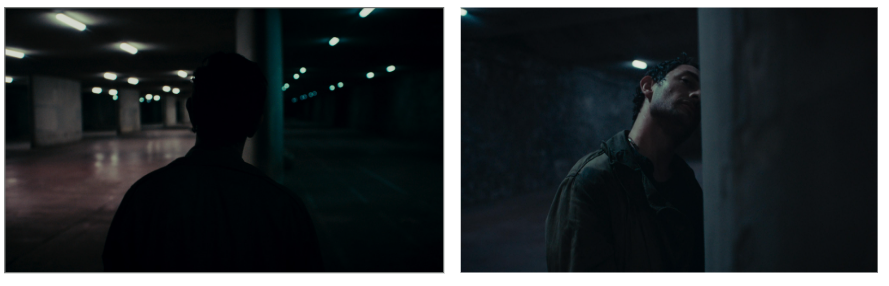
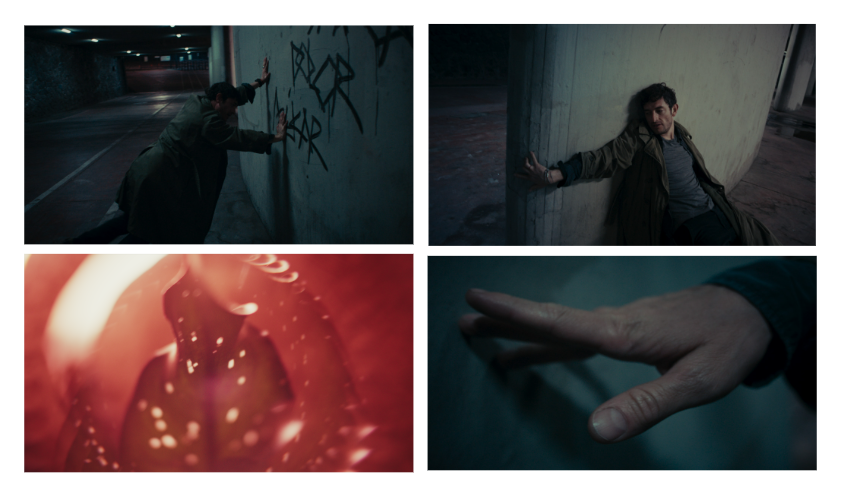
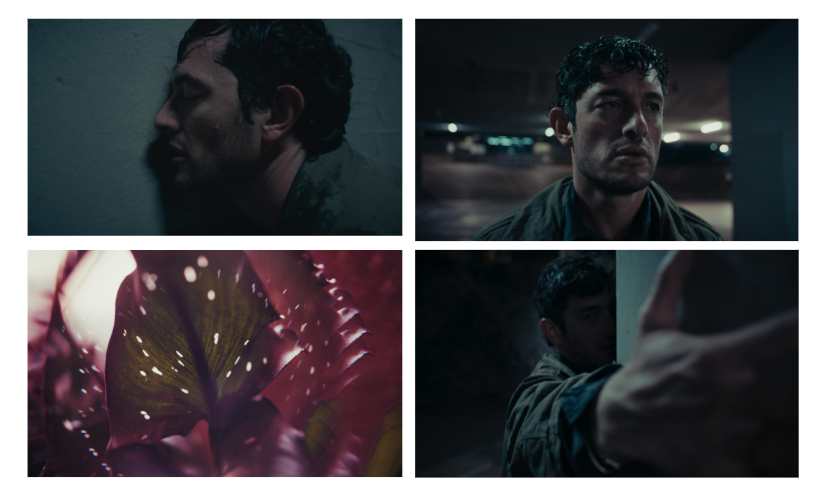
Narrative Core | MANDRÁGORA.

SYNOPSIS

A man named Pyramus descends into a tunnel held up by memories, where a female voice, The Fissures, replies: in metamorphosis there is rebirth.

Through a subversive feminine gaze, Pyramus sheds heroism and becomes a body that cares, leading us toward a delicate vulnerability that flourishes through the practice of staying alive. Because we are not alone when we pass through darkness. Because even at the edge, another way of being alive can emerge, since there are networks of care, of love, small or unexpected fissures that can hold us and offer us another possibility within that porous space between life and death. To transform and express pain through movement, ritual, metamorphosis, in life.


XII. ABOUT THE ARTIST.

BIOGRAPHY.

FANA ADJANI (Mexico City, 1988) is an artist, film director, and choreographer. Her practice explores the body, cinema, and choreography as an expansive and experimental dispositif that articulates living relations between memory, human rights, and the politics of care, working across the visual arts, the performing arts, and at times their intersections with the mainstream.

She directed the short film TIERRA, selected at festivals such as the Fairy Tales Queer Film Festival in Calgary (where it received the Programmer’s Choice Award for Best Short Film), the Guanajuato International Film Festival (GIFF), MICGénero, the Seattle Queer Film Festival, and the Outfest Fusion QTBIPOC Film Festival in Los Angeles. In 2023, TIERRA was incorporated into the University of California, Los Angeles (UCLA) Film & Television Archive and had a special screening at GAVLAK Gallery. About the film, Rolling Stone (U.S.) wrote: “Wonderfully directed.”

As a visual artist, she has presented her work at venues such as the Museo Universitario del Chopo (UNAM), where she coordinated the TIERRA Cycle and presented the installation Se encuentran, se acompañan, as well as at MUAC (Museo Universitario Arte Contemporáneo, UNAM) and the Palacio de Bellas Artes. Her audiovisual piece Whole Body has been screened at The Overkill Festival (Netherlands), in Bogotá, and was presented exclusively by ForbesLife.

In 2023, she was an artist-in-residence at Fundación Casa Wabi.

Between 2023 and 2024, she collaborated as an advisor to the Youth Council for Cultural Outreach at the National Autonomous University of Mexico (UNAM).

WORKING METHOD.

FANA ADJANI explores cinema, image, and choreography as an expansive and experimental dispositif that articulates and traverses living relations among bodies, memory, human rights, and the politics of care, understood as sensitive fields where the intimate and the collective mutually affect one another. She works across the visual arts, the performing arts, and at times their intersections with the mainstream, creating a space to tension and reconfigure the ways we see and feel in common.

PRESS.

“...directed with extraordinary beauty in Tierra...”

— Julyssa Lopez, Rolling Stone (U.S.)

“Adjani has already directed music videos and, with Tierra, makes the leap to a larger-scale production (...).”

— José Juan de Ávila, Milenio

“The project (...) will continue to reap success for Fana Adjani’s avant-garde cinematic and choreographic vision.”

— Armando Tovar, Naufraghost

Tierra, directed by the renowned Mexican multidisciplinary artist Fana Adjani, is a film that acknowledges the constant destruction of our planet and of the body as that home in transformation.”

— Bianka Estrada, Sin Embargo

“The most prominent Mexican stage director (...) in recent times.”

— Sheila Ramírez, Forbes

“She has managed to transcend the barriers or limitations that usually exist in the industry, giving voice to a social movement that powerfully draws attention.”

— Danieska Espinosa, Crónica

Subunguis (a piece by Fana) is a recommendable stage experience that seduces with its visual proposals and an urban soundscape, and leaves us with space to reflect on the times we are living through and on the difficulty of escaping them.” — Wenceslao Bruciaga, Time Out.


XIII. COLLABORATORS.

EMILIO VALDÉS.

Actor: Pyramus. Producer. Cinematographer.

Emilio Valdés (b. 1982, Mexico City) is a cinematographer and a graduate in Visual Arts from La Esmeralda. With a career spanning visual arts and exhibitions in Europe and the Americas, he merges the sensibility of the gallery with cinematic form.

He was the cinematographer for Rezeta (Frías, 2012), Vienna and the Fantomes (Naranjo, 2019), A 3-Minute Hug (González, 2019), Pajareros (Padua, 2019), and How Being Fishes… (Foulkes, 2021).

His recent work includes Murder City (Olmos, 2023), Mariachis (HBOMAX, 2023), and Depeche Mode: M (Fernando Frías, 2025).

CARLA FAESLER.

Voice: Life / The Fissure.

Carla Faesler (b. 1967, Mexico City) is a writer, visual poet, and editor whose work intertwines literature, sound, and image. Trained in Political Science, Development, and Aesthetics, she co-founded Motín Poeta and has created photo-poems, video-poems, and cine-poems.

Her novel Formol (Tusquets, 2014) was named Best Book by La Tempestad, and her poetry was recognized with the Gilberto Owen Prize. A member of Mexico’s National System of Art Creators, she has collaborated with artists such as Melanie Smith and Francis Alÿs.

KENJI KATORI.

Camera.

Kenji Katori is a cinematographer and a graduate of the CCC, with a career spanning film and television. His credits include Oveja Negra (2009), I Hate Love (2012), Sugar Kisses (2013), and Lost Girls and Love Hotels (2020), which he co-directed.

He has also worked on 007: Spectre (2015), God Is a Bullet (2023), and on series such as Coyote and Mayor of Kingstown. His short films have been exhibited at Cannes Critics’ Week.

PERE GEORGE.

Producer. Sound Design.

Producer, composer, arranger, and engineer. He has been nominated for two Latin GRAMMY Awards, including Album of the Year (2018). He has worked with a range of artists from both the Anglo and Latin American music scenes. He has also worked as a film and video producer.

He produced Fana Adjani’s award-winning short film Tierra (Programmer’s Choice Award for Best Short Film at the Fairy Tales Queer Film Festival 2022 in Calgary, Canada), which was part of the official selection of festivals such as the Guanajuato International Film Festival, the Seattle Queer Film Festival, MICGénero, among others. He has also produced various music videos.

CARLOS CORTÉS NAVARRETE.

Mixing.

Winner of the Academy Award, BAFTA, and CAS Award for Best Sound for his work on the feature film Sound of Metal (2019). Carlos completed his audio engineering studies at The Recording Workshop in Ohio, United States.

He began his career as a touring engineer with various bands across the United States, and his trajectory in sound design began with theater productions such as SAVIA and YOGAMOI, presented at the Festival de L’Imaginaire in Paris, France.

NORTEC: FUSSIBLE / PEPE MOGT.

Music.

Pepe Mogt (Tijuana, Mexico) is one of the pioneers of electronic music in Mexico, with more than 30 years of experience as a musician and visual artist. Also known under the alias Fussible, he is the creator of the concept and foundational seed of the Nortec sound, and co-founder of the Nortec Collective, a project that revolutionized the scene by fusing electronic music with norteño and banda, and later gave rise to groups such as Nortec Collective Presents Bostich + Fussible, as well as projects like Latinsizer, among others.

His sonic exploration ranges from experimental electronic music close to techno and house, to ambient textures and extensive use of modular synthesizers, which has led him to perform at international festivals such as MUTEK (Mexico and Japan), Glastonbury, FUSION, CRSSD, SXSW, and Coachella, as well as in numerous clubs around the world.

His international Grammy nominations include the albums Bulevar 2000 and Tijuana Sound Machine in the Rock and Alternative categories, as well as two Latin Grammy nominations in 2006 for Tijuana Sessions Vol. 3 in the categories of Best Alternative Music Album and Best Recording Package.

ERNIE SCHAEFFER.

Colorist. Producer.

Ernie Schaeffer is a colorist and post-production specialist with more than 30 years of experience. He has supervised more than 50 films screened at major festivals, including Cannes, Berlin, and Sundance. After helping establish the film program at SAE Mexico, he joined Splendor Omnia as an image supervisor.

He is currently Head of Color at Caffeine Post, where he develops remote workflows for Netflix, Disney, and others, and trains professionals across Latin America as a certified DaVinci Resolve/Fairlight instructor and Blackmagic ambassador.

XII. CONTACT.

FANA.ADJANIPROJECT@GMAIL.COM

Production: Jorge Perelló Undreiner — peregeorge@peregeorge.com | +52 777 134 5221